My earlier annotations of Byron's "Don Juan" have now been extended to include Cantos I to IV. You can find the new version here.
Cantos III and IV of Don Juan, now added to the annotated version, tell the pathetic tale of Juan and Haidée, the only child of the Ionian Pirate-Slaver, Lambro. In Canto II, Juan is the sole survivor of a shipwreck, washed up on an island in the Ionian sea where he his rescued by Haidée. Canto III tells the story of their romance in a touching romantic idyll — with the usual mordant Byronic diversions into nascent Greek nationalism (the cause in which he was to die); the role of poetry in the making of national myth, and; the frailty of poetic fame.
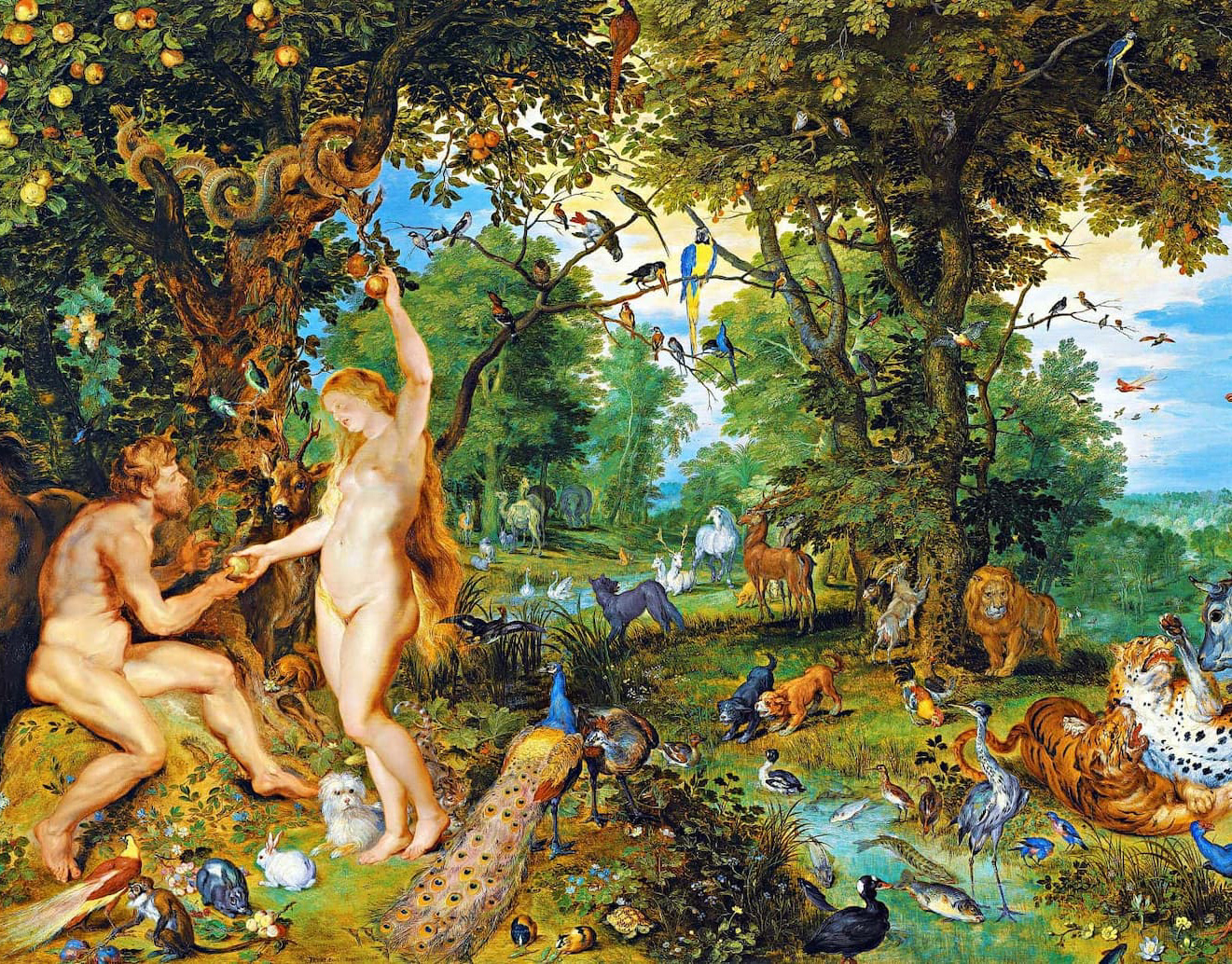
There is a serpent in Eden, of course. Lambro, Haidée's father, unexpectedly returns from one of his piracy expeditions, landing on a remote beach of the Island. As he approaches his home he finds a feast taking place with music and dancing celebrating the "betrothal" of Juan and Haidée. He's a wily, strategic character. Although incensed by the prospect (and by the tales of some idiot guests) he bides his time. Then, in Canto IV, he pounces, seizing Juan after a brief struggle and throwing him, wounded and chained, into the bottom of a slave-galley that puts out to sea. Haidée is wild with anger and despair, but helpless. She falls into a catatonic state and dies, at last, along with Juan's unborn child whom she was bearing.
There is a serpent in Eden, of course. Lambro, Haidée's father, unexpectedly returns from one of his piracy expeditions, landing on a remote beach of the Island. As he approaches his home he finds a feast taking place with music and dancing celebrating the "betrothal" of Juan and Haidée. He's a wily, strategic character. Although incensed by the prospect (and by the tales of some idiot guests) he bides his time. Then, in Canto IV, he pounces, seizing Juan after a brief struggle and throwing him, wounded and chained, into the bottom of a slave-galley that puts out to sea. Haidée is wild with anger and despair, but helpless. She falls into a catatonic state and dies, at last, along with Juan's unborn child whom she was bearing.
Juan wakes to find himself chained in the belly of the boat with the troupe of a small Italian Opera company whose Impressario has sold them into slavery. A tour de compagnie follows in an hilarious monologue from the Basso buffo. They are all headed to the slave markets at Constantinople as the Canto ends.
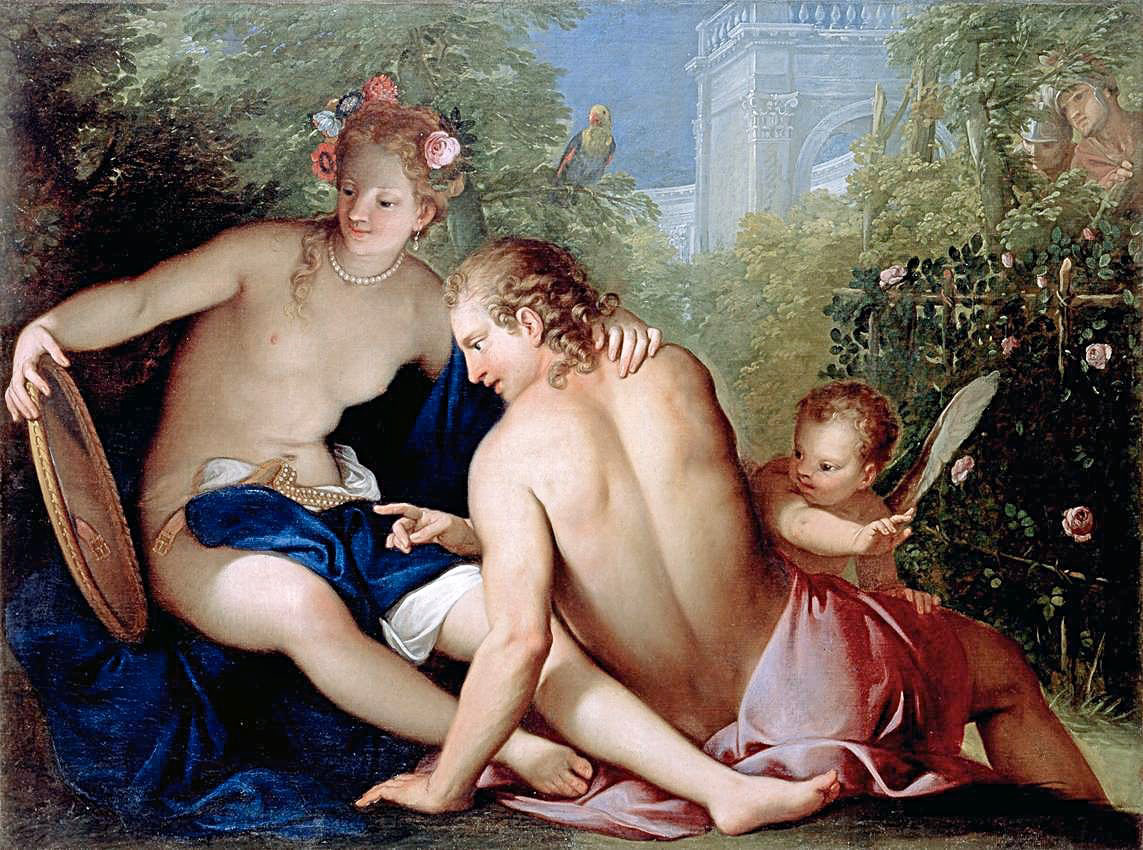
The image is Lazzarini's "Rinaldo & Armida": In Tasso's epic "Jerusalem Delivered", Rinaldo is a fierce, honorable and handsome warrior. Armida has been sent to stop the Christians from completing their mission and is about to murder the sleeping soldier, but instead she falls in love. She creates an enchanted garden where she holds him a lovesick prisoner (here shown as bewitched by his own image). His companions Carlo and Ubaldo (visible in the bushes, top-right) rescue Rinaldo by holding a diamond shield (lo scudo adamantino) to Rinaldo's face so that he sees himself in his weakened state, thus breaking Armida's spell.
Byron's comic epic is also, in part, about the (self-) deceptions of love. He references this episode from Tasso in Canto I.lxxi
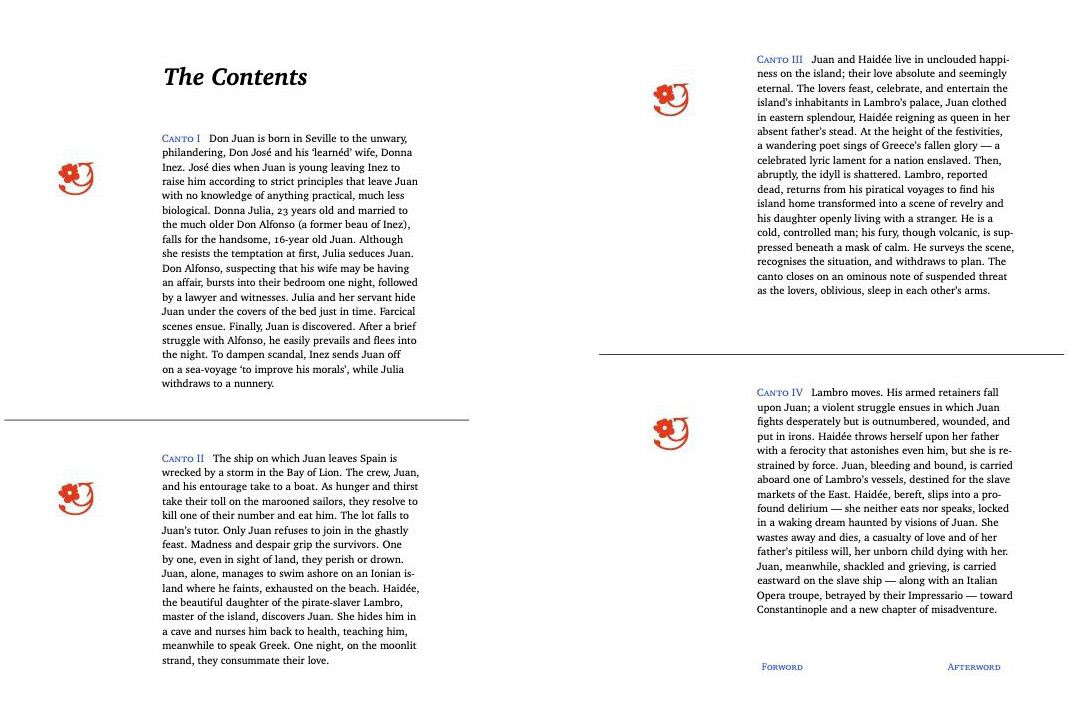
Here are some images of the Contents pages in the new edition. Click to download.
Here are some images of the Contents pages in the new edition. Click to download.